
Peace Dogs
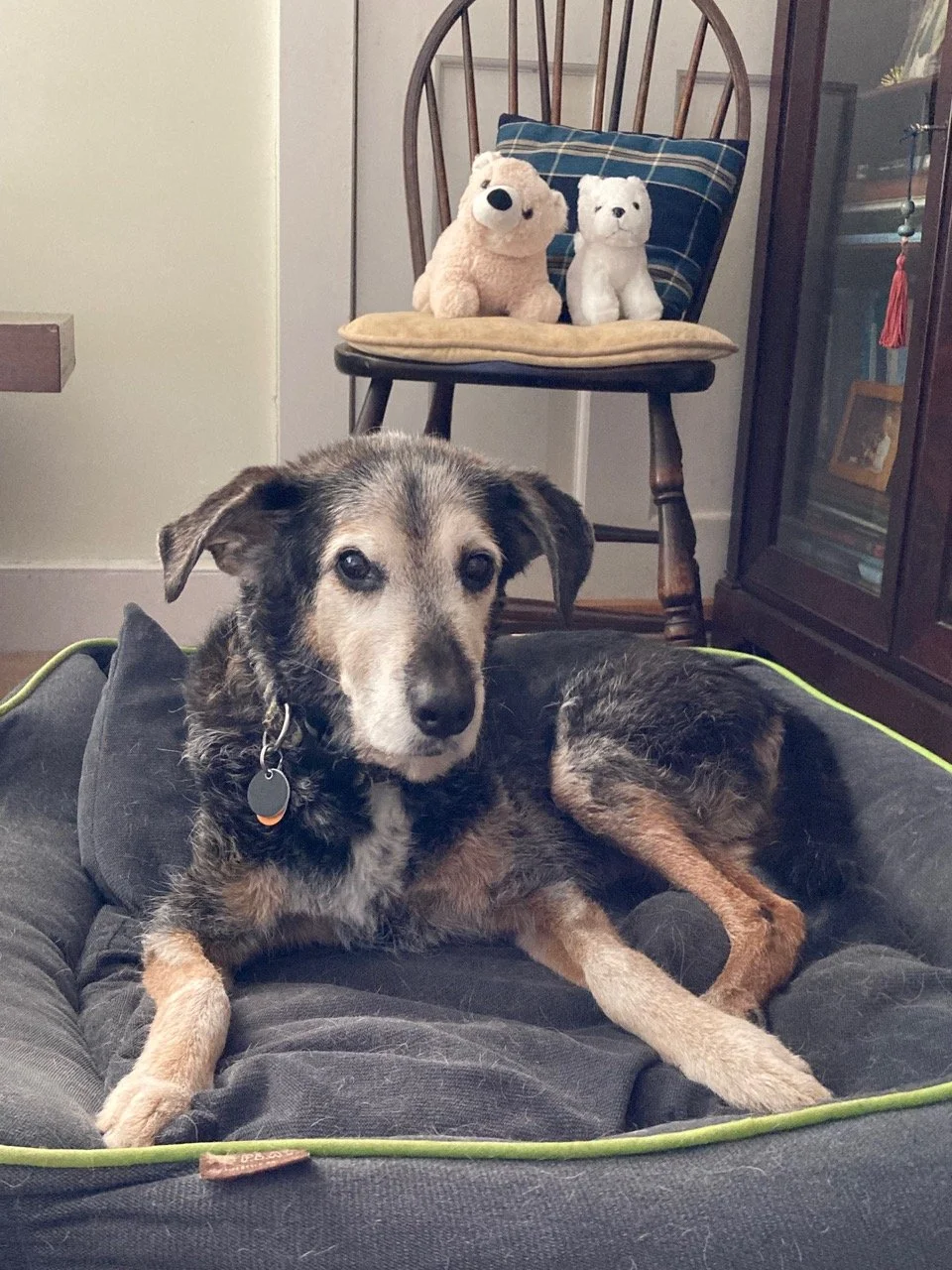
BY TRACY BASILEMAY 2, 2026“Dog reactive” is the term I was taught. Not “aggressive,” just “reactive.” It sounds so much better. In need of some dharma teachings perhaps, Woody never learned to check himself, to calm his mind of fear, anxiety, or anger, whenever he encountered almost all other dogs. He just went berserk.
I learned to adjust our walks, scanning the sidewalks and park paths ahead, especially around corners, looking for open spaces where I could more easily see if another dog was coming. He never bit any of his own species mind you, but you’d never guess it by his lunging and barking. His behavior, which grew out of his prior life with a woman who muzzled him whenever he was around the other dogs in her house, soon resulted in busting both my shoulders. Sexagenarian arthritis might have been the official diagnosis but Woody certainly helped it along as I held tight to his leash, squarely planting both my feet with an in-breath and a prayer the moment we spotted another dog.
I marveled at how training books and YouTube videos advised me to carry treats and small squeaky toys on our walks and bring them out at that critical moment of total explosive energy, or better yet, a second before, in hopes of distracting him with something irresistible. It puzzled me, this ability to perform several actions simultaneously, as if they assumed by some miraculous feat that I could transform myself into an earthly version of the Hindu goddess Kali or Ganesha. Training the reactive dog clearly required multiple hands. I had but two.
This didn’t stop me, however, from falling deeply in love with Woody because in so many ways he was perfect. He was my glue, the connective tissue that surrounded every part of my life for twelve years. Most of all, he gave me a connection to other humans that I’m finding hard to replace now that he’s gone. I bonded with people I probably never would have met.
As soon as he figured out that the AutoZone store in the neighborhood shopping center gave dogs treats in the back office, he insisted we visit every day. It took me weeks to remember all the salespeople’s and managers’ names, but Woody knew and greeted each one like an old friend. Soon Shani, Martin, and Raf became my friends, too.
And so, as I contemplate adopting another canine, and as I wonder if this next one will be my last, I see clearly now that all the dogs throughout my life were always holding the everything together.
During my childhood my brother would say things to purposely set off my dad who had a hot Italian temper. Mom sometimes exploded under pressure. I was the quiet one, often finding refuge in a mass of fur. Over the years, the dogs—Junior the beagle, Frieda the dachshund, Bentley the Lhasa Apso, Petite the 90-pound Briard, and the German Shepherds, Missy and Georgia—calmed us down. They were the safe zone. The buffer zone.
Decades later, my brother, a gay middle-aged man ill with HIV AIDS, had moved back in with my parents who were then living on Cape Cod. In need of a creative outlet, Richard decided to fill up the walls of the mud room (the entranceway we all used, guests and family alike) with small framed photos of all our dogs. He’d pick up the frames in thrift stores for pennies, sometimes spray paint them or varnish them, print out color photos or hunt through shoeboxes of old prints. Tempers still flared but this room, cluttered with jackets and raincoats, boots and sneakers, offered a moment of relief as our family carried on as best we could.
In the spring of 2020 my brother fell seriously ill. We had been estranged since the death of our parents. In an effort to break our wall of silence, I wrote him a letter and mailed it special delivery to the hospital so it would arrive the next day. My brother died a few days after the letter was delivered. For reasons I still don’t understand, he never opened it. Maybe he would have read it if he knew it was about the dogs. I’d like to think so. I needed to find common ground and the letter I wrote was a collection of stories about each of the dogs we loved, ending with Woody, whom Richard never met but would have adored.
And that’s how I came to see dogs as Zen peacemakers.
***
I’m sitting at my computer desk in the suburbs outside New York City watching a video on social media of 19 Buddhist monks as they embark on a 2,300 mile walk for peace in the Southern United States. They are accompanied by an RV and support staff, including a videographer who posts daily, police cars with flashing lights, and a dog.
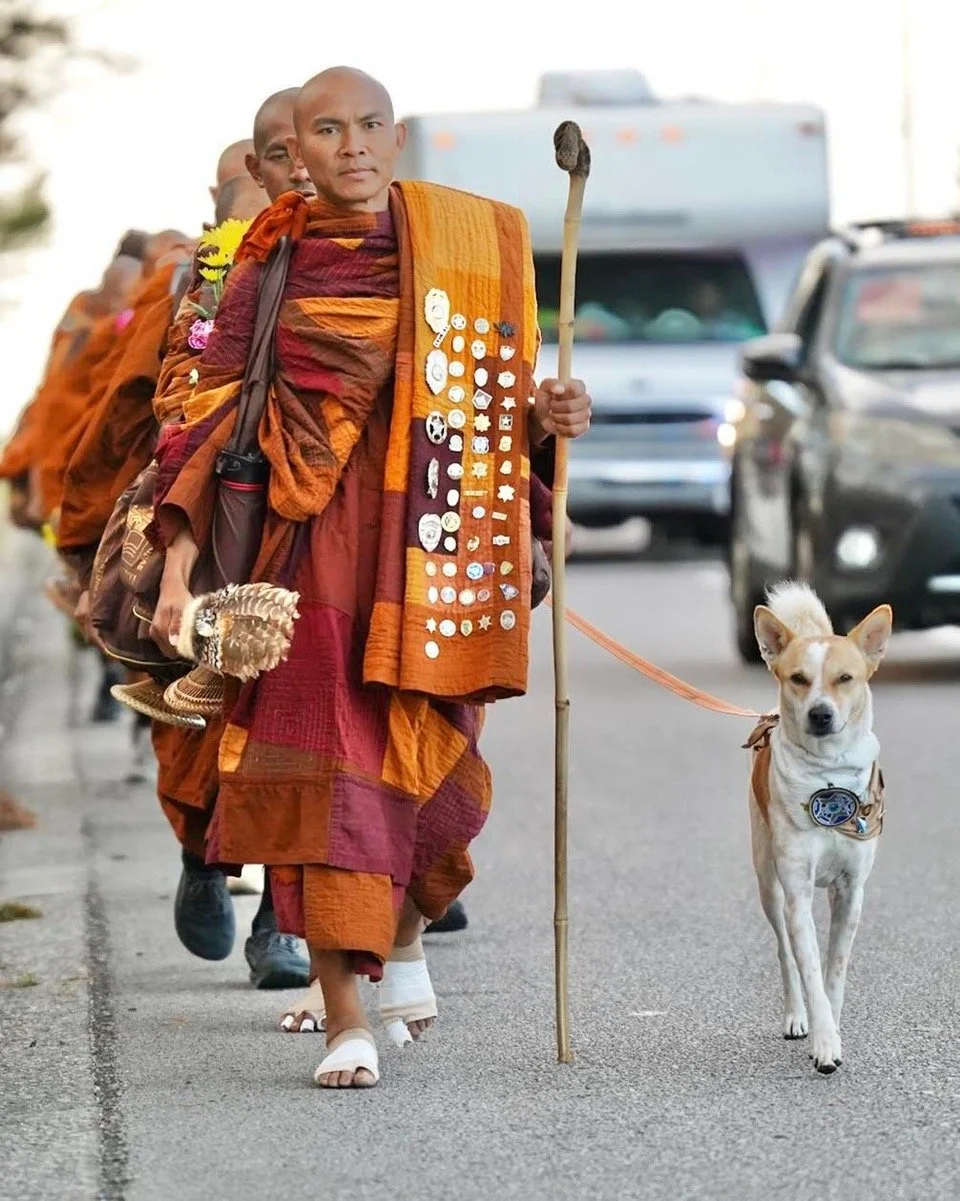
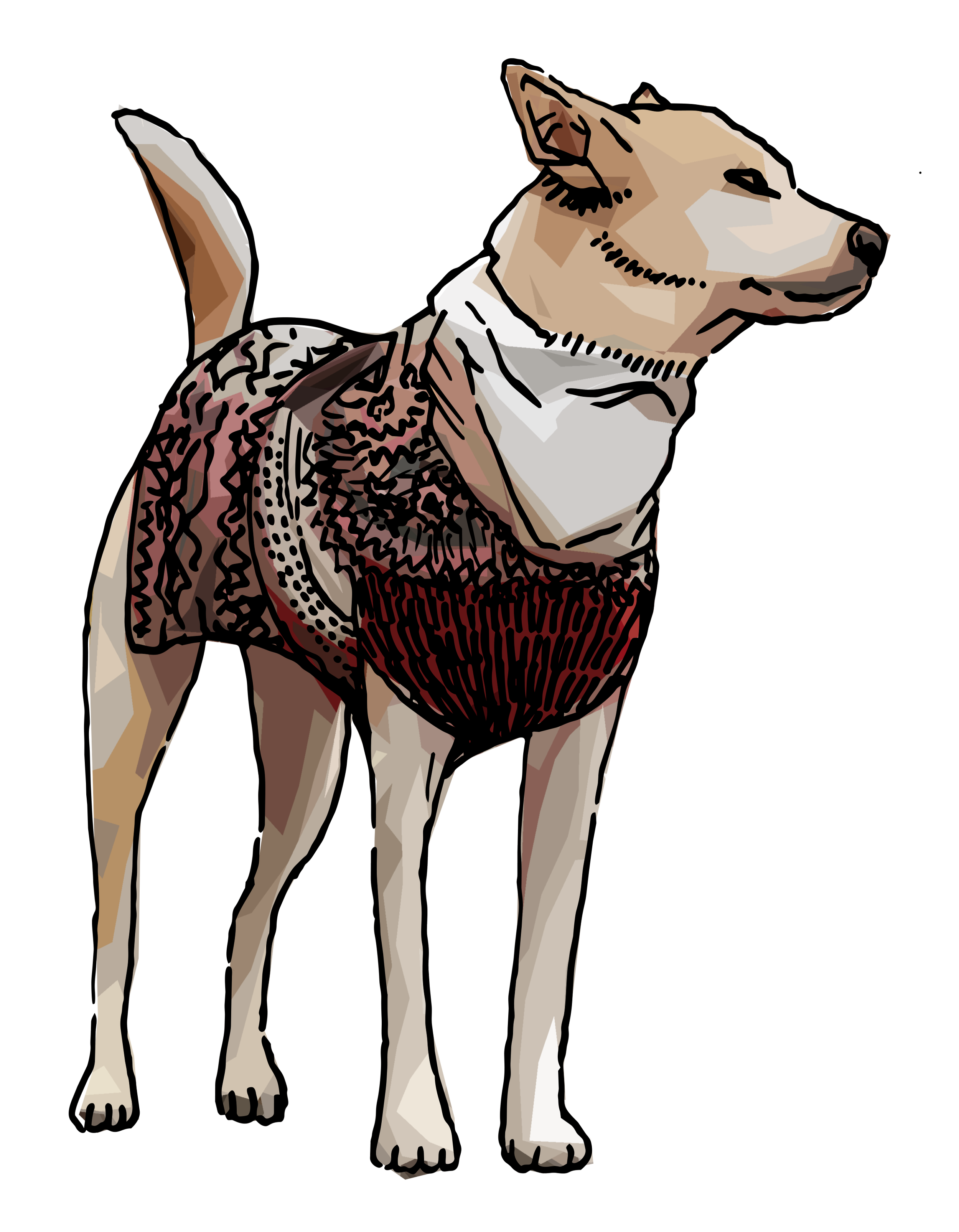
Aloka and the Buddhist monks, Walk for Peace, Fall 2025.Walking beside the lead monk, Bhikkhu Pannakara, a Vietnamese-born former IT engineer for Motorola from Ft. Worth, TX, is Aloka, a tan-and-white street dog who hails from India. Aloka is a pariah dog, also called an Indie dog. Not to be confused with the disparaging label of mongrels, these street dogs evolved naturally over thousands of years and typically sport a lean, athletic build, with pointed muzzle and curved tail. They are intelligent in the same way that beavers know how to build dams and elephants mourn their dead.
I don’t know how else to explain it, but as soon as I see Aloka joyfully setting the pace next to the lead monk and all the venerables draped in shades of saffron, cinnamon, and maroon, walking up and down country roads, city streets, and highways in the Deep Red South in the autumn of 2025, I feel something inside me shift. I begin to tear up. The next thing I know I start planning my appointments around their livestream schedules.
“Why are we all emotionally undone by monks who are….just walking?” one devoted follower asks online. That’s how I feel, too: emotionally undone. As we face the end of the first year of the second Trump administration’s horribly cruel policies towards non-whites and whites, undocumented immigrants and citizens, women and the environment—clearly too many wrongs to list here—the story of these 19 monks and one dog allows us to pause from feeling overwhelmed and disillusioned. By simply walking every day asking for nothing, without wanting for anything, their message of loving-kindness and peace offers me and all who listen a token of grace. A chance to breath deeply and finally figure out that peace only starts from within.
As days and weeks pass, and the pilgrimage inches its way up a map of the Eastern United States, everyday Americans of all colors start coming out side by side, some in strollers, others in wheelchairs, waiting alongside city and rural streets to see them, to ask for a blessing, to toss flowers on their path, or offer a mandarin orange, while a growing number of people like myself follow in spirit on social media.
Bhikkhu Pannakara’s evening talks remind me of my college years when I embraced Buddhist, Taoist, and Zen teachings with a fresh eye. One of those years I spent studying and traveling in Japan, but that was a long time ago. Now all these ideas are stirring in me again. While it feels good to reconnect with the younger hippie-era person I once was, I confess there are so many lessons I’m learning anew—about joy and suffering, impermanence and attachment, right intention and compassion—that I missed back then.
One of these lessons concerns merit. “Be Kind. Be Bold. Do Good.” exclaims a sticker on my fridge that sums it up pretty well I think, but I learn from Bhikkhu Pannakara that merit is also a way to deal with grief over the loss of a loved one and this surprises me. He says that we can show compassion instead of feeling sorrow by creating positive karma through good deeds and dedicating the merit we accrue to those who have passed on. Without much thought, I start helping a friend who fell and broke his leg and my sadness slowly fades.
Larger and larger crowds are gathering to see the monks and someone always seem to shout out questions about the dog. The venerable Pannakara shares this story: In 2022-2023, he was leading a pilgrimage in India. Stray dogs often tagged along for a few hours, sometimes a few days, but this dog was different. He never left. Pannakara named him Aloka. “It means light. I want him to find the light of wisdom to liberate all kinds of suffering to attain Nirvana…” So, like the monks, Aloka, too, is on a spiritual path. Because he chose to follow the monks, “it means he understands that this is his journey,” Pannakara explains. When the walk in India ended, he had to make a decision: “If I let Aloka go, he’s just going to become a stray dog again. But he’s already completed 106 days of walking with us… so he deserves better.”
After 30,000 years of living with dogs, can we not see that there is a bit of nirvana within them? Can we agree that they, too, have karma? After the money was raised for the dog’s airfare and the 28 days of quarantine passed, Aloka rejoined his sangha at the monastery in Ft. Worth, Texas. Two years later, an online follower writes: “Because of Aloka I found the Walk, and thru the Walk I found a deeper sense of peace.”
***
Woody came to me through an Indian woman who was fostering him in her home in New Jersey. His handsome photos appeared on Petfinder.com and the next thing I knew we were on the phone in conversation about “Prince” (his prior name). The day after he arrived I loaded him into the car and boldly took him into the nursing home that my 92 year-old father had been living in since my mother’s death nearly two years earlier. As we turned the corner into his room, door left ajar, Woody bounded in. It was love at first sight. Kismet. Like they knew each other from prior lives and were delighted at this unexpected reunion.
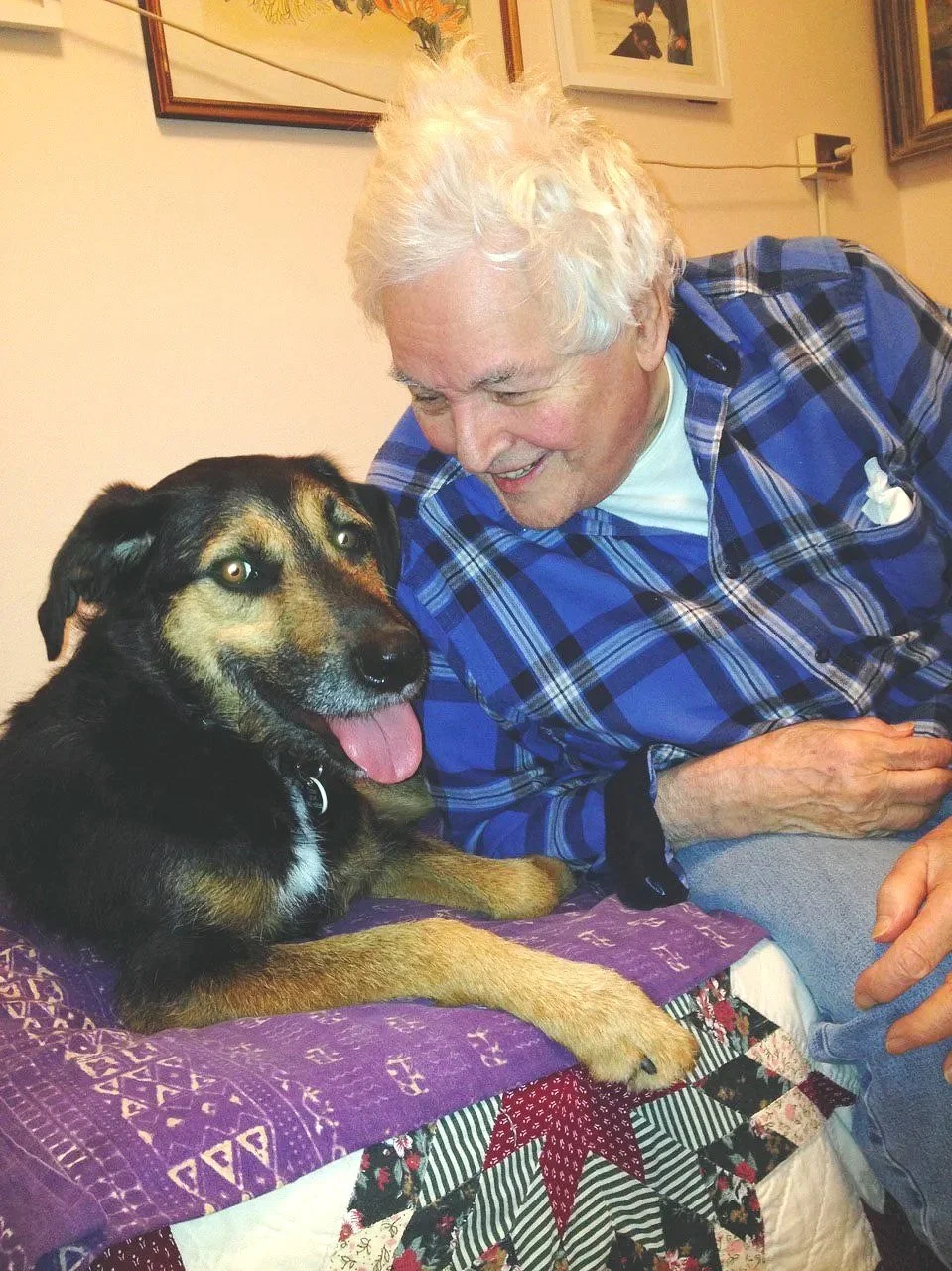
My Father and Woody, November 2013.My dad had a private room with a door and a window that felt more like a room in a house than a hospital. When Woody arrived it felt even more like home. So Woody could be loose, I used to hang a sign around the outside doorknob that read: “Dog inside. Please knock.” Which of course, prompted the nurse, the nurse’s aids, the handyman, the nutritionist, the activity director, and the receptionist to take turns knocking to say hello to Woody. Which my dad just adored—Woody laying on Dad’s bed, his tail wildly thump-thump-thumping before jumping up to greet each guest. Everyone’s spirits felt lighter.
My father passed away 6 months later on Mother’s Day, May 2014, and I take solace and breath a little easier in knowing that Woody made those days happier for us both.
***
How do any of us calm our minds of fear, anxiety, sorrow, and anger? There will always be a part of me that overreacts, spins out of control, looses it. I will always get mad. Be afraid. Worry. Want more.
Often at night, Woody curled up in his bed and I in mine, about 10 or 15 minutes past lights out, I’d hear him slowly release one… long… soothing… exhale and sense a serenity and calmness filling the room. I’d respond in kind, as involuntary a reaction as if a doctor had tapped my knee to see my leg bounce. This memory brings me joy. Some nights I can still hear him sigh.